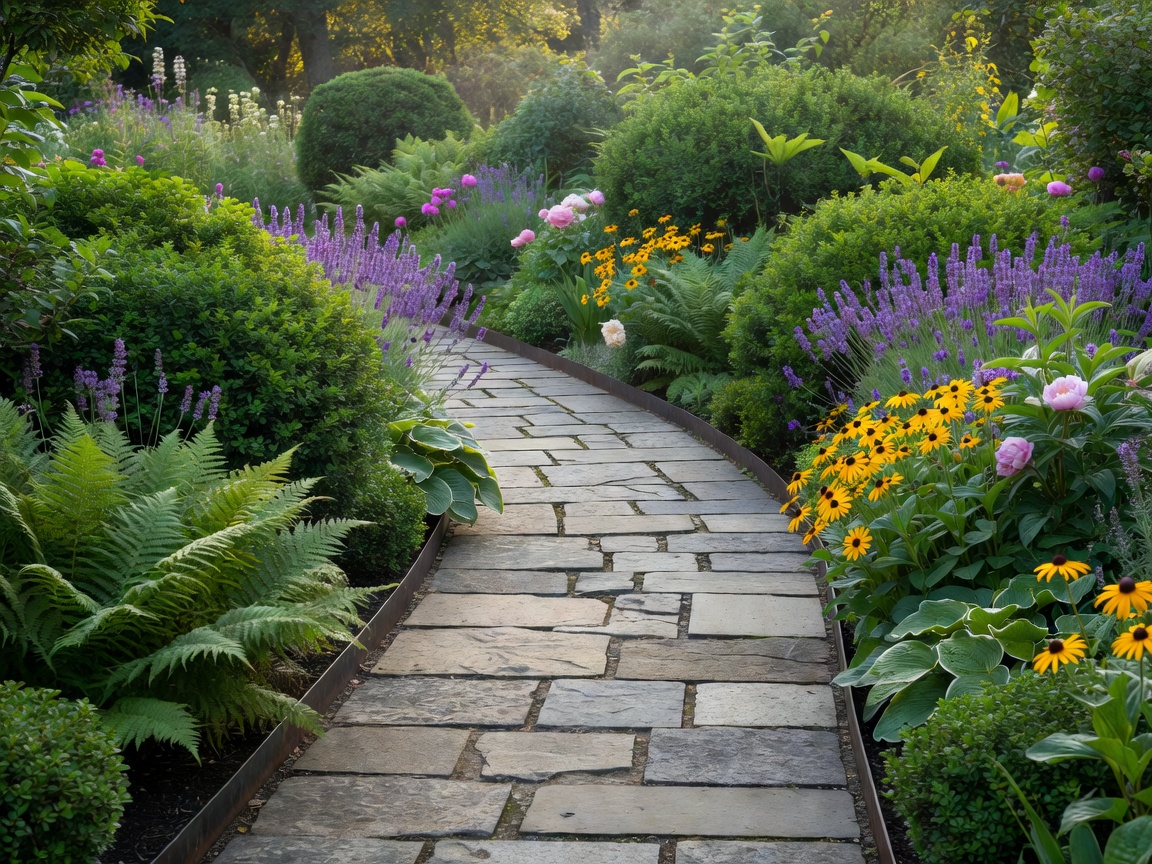
Materials set the tactile and visual character of a garden. Planting changes with light, weather and time. A coherent landscape plan considers both as a system: where people move, how surfaces shed or absorb water, what plants need to establish and how the whole composition will be maintained.
Choose surfaces for use and setting
Limestone can provide a restrained, pale surface and a clear contrast with dark foliage. Its appearance, wear and suitability vary by source, finish, climate and exposure. Sandstone offers varied tones and textures. Brick can connect a garden to surrounding masonry or introduce a smaller paving module. Concrete allows broad, simple planes, but finish, joints and weathering affect its appearance. No material is suitable in every climate or application.
Timber brings warmth and a softer underfoot character to decks, seats or screens. It needs a realistic inspection and care plan, with species and finish selected for the exposure. Metal can create fine edges, screens and details. Its finish can weather or change over time; consider contact with soil, irrigation and adjacent materials. Gravel can be useful on suitable paths or informal surfaces, but particle movement, edge restraint and accessibility need review.
Compare samples outdoors. Wetness, shade and sun alter perceived colour. Check how paving meets thresholds, planted edges and drains. Joint size, surface texture and installed pattern can affect movement, repair and cleaning. Confirm slip suitability for the location with product guidance and qualified suppliers rather than relying on appearance alone.
Build planting in layers
Planting structure can use trees for canopy, shrubs for mid-height form, perennials for seasonal variation and groundcover to connect the lower layer. The balance depends on the garden’s scale, available soil and the level of maintenance expected. A small court may need a single carefully placed tree or repeated container planting rather than a dense canopy.
Evergreen structure gives a garden an outline through the year. Deciduous trees and perennials bring seasonal change, filtered shade and varied texture. Clipped forms create a precise edge but need repeated cutting. Looser shrubs can reduce clipping but may occupy more room. Select plants for regional climate, soil, exposure and mature dimensions. Verify suitability with local horticultural sources where conditions are unfamiliar.
Planting beds need enough soil volume and access for care. Set edging to prevent soil spilling onto paths. Keep plants clear of doors, drains and light fittings. Consider how growth will affect sightlines, neighbouring properties and the intended scale of a space. A planting plan should indicate plant groupings, quantities and spacing appropriate to its design stage; it should not promise a guaranteed result.
Coordinate drainage, irrigation and lighting
Surface materials affect the way water runs across a site. Permeable paving, gravel and planting may contribute to water management, but their performance depends on sub-base, soil, falls, maintenance and local conditions. Coordinate paving levels with door thresholds and existing drainage. Do not cover inspection points or direct water toward buildings.
Irrigation can support establishment or manage planting in a dry, exposed location. It adds equipment, maintenance and water-use considerations. Decide whether manual watering is practical before installing a system. Planting selection and soil preparation remain central; irrigation does not make every plant suitable for every site.
Garden lighting should support routes, entrances, steps and specific features without unnecessary glare. Consider fixture position, wiring access, light spill and serviceability. Low-level, shielded fittings can define circulation more quietly than bright general illumination. Electrical installation should be handled by an appropriately qualified professional and comply with local requirements.
Good for
- Projects that need a coordinated paving, planting and maintenance palette.
- Gardens where seasonal structure matters as much as the initial appearance.
- Sites requiring clear decisions about drainage, irrigation or night lighting.
What to check
- Local climate, soil, aspect, exposure and mature plant dimensions.
- Sample appearance in wet and dry conditions, shade and direct sun.
- Surface maintenance, repair access, joints, edges and drainage route.
- Water access, irrigation capacity and lighting service requirements.
- Any supplier guidance, local standards or professional advice needed.
Limit the palette before adding detail. A small set of complementary surfaces can make planting more legible. Review materials against the building, garden use and care routine. Product-specific properties vary; confirm them with the relevant supplier and professional before specification.